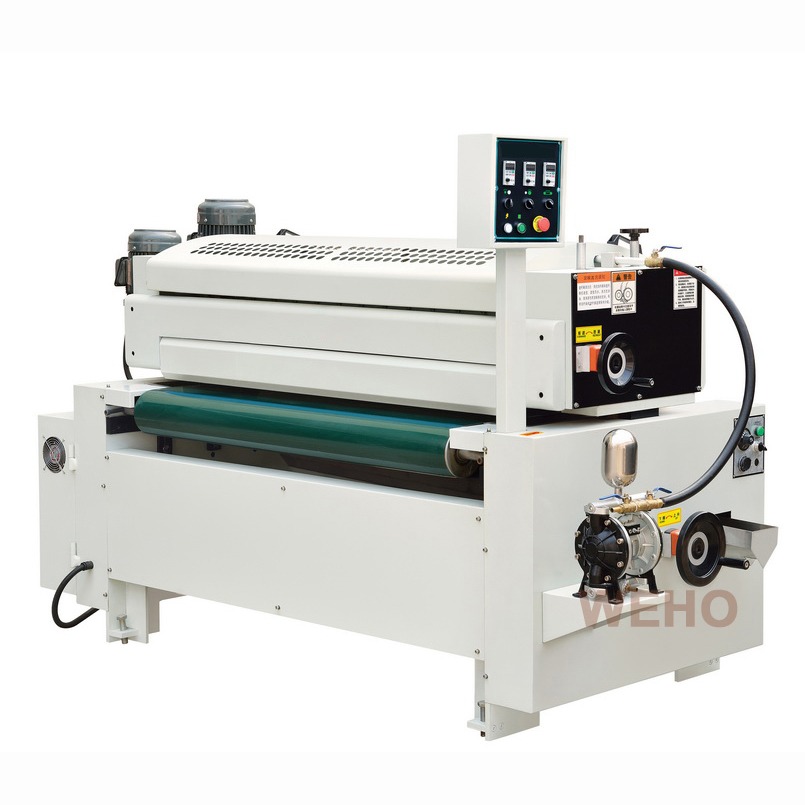
UV Roller Coating vs Spray Coating
In modern furniture manufacturing and wood processing industries, surface finishing plays a critical role in product quality and appearance. Choosing the right coating method can greatly affect production efficiency, coating consistency, and overall manufacturing cost.
Two of the most commonly used finishing technologies are UV roller coating and spray coating. Both methods are widely used in wood finishing processes, but they differ in efficiency, cost, coating quality, and suitable applications.
For manufacturers looking to improve production efficiency, understanding the differences between these technologies is essential. Many factories today use automated equipment such as a uv roller coating machine or a wood painting machine to achieve stable coating quality and large-scale production.
As a professional woodworking machinery manufacturer, WEHO provides advanced uv coating machines for wood, automated coating systems, and finishing solutions for furniture production lines.

What Is UV Roller Coating?
UV roller coating is an advanced finishing technology used primarily for coating flat wooden panels. In this process, liquid coating materials are evenly applied to the panel surface through precision rollers.
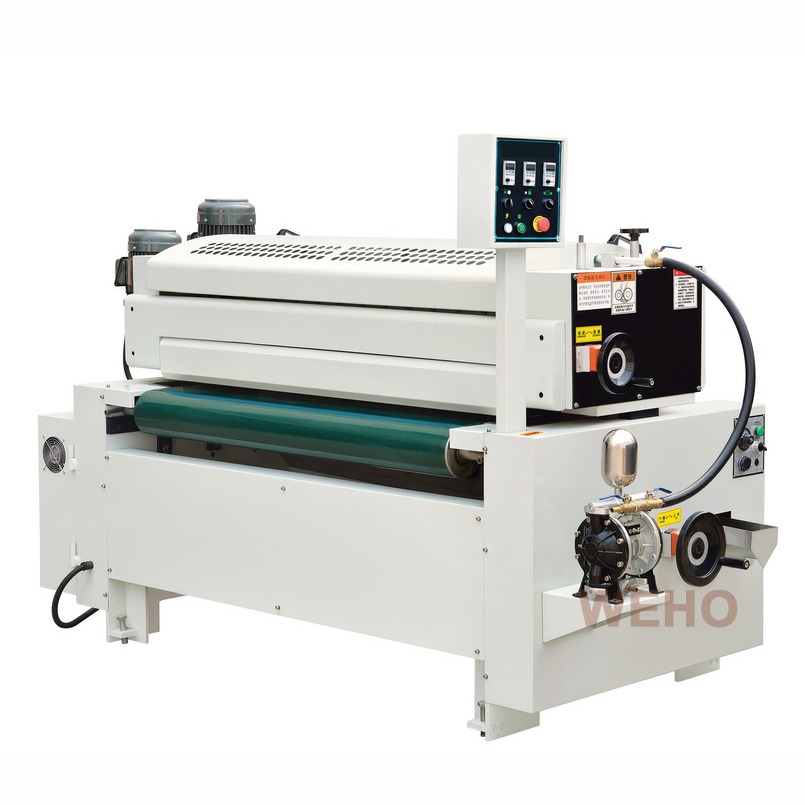
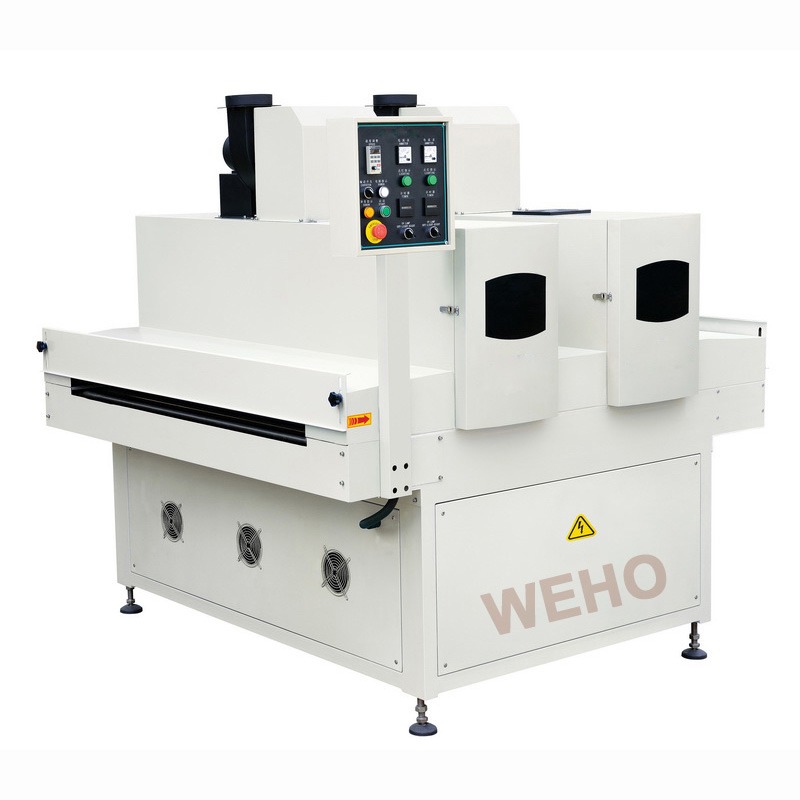
After the coating is applied, the panel passes through a UV curing unit where ultraviolet light instantly hardens the coating. This rapid curing process allows continuous production and significantly improves manufacturing efficiency.
UV roller coating is commonly used in industries such as:
- Panel furniture manufacturing
- Decorative board production
- Cabinet door finishing
- Laminate flooring production
Modern factories often use a professional uv coating machine for wood to automate the finishing process and ensure consistent coating thickness.
Compared with traditional methods, UV roller coating provides smoother finishes, higher productivity, and better coating stability.
What Is Spray Coating?
Spray coating is a traditional finishing technique where paint or coating materials are applied using spray guns. The coating is atomized into fine particles and sprayed onto the surface of the product.
Spray coating can be performed manually or with automated spraying equipment such as a furniture UV spraying machine.
This method is particularly suitable for products with complex shapes or uneven surfaces where roller coating systems may not reach certain areas.
Typical spray coating applications include:
- Solid wood furniture
- Curved or irregular furniture components
- Decorative carvings
- Custom furniture production
Although spray coating provides high flexibility, it usually results in more paint waste due to overspray and may require more labor compared with automated coating systems.
UV Roller Coating vs Spray Coating
Both coating technologies have their own advantages depending on production requirements. The following table highlights the key differences between UV roller coating and spray coating.
| Feature | UV Roller Coating | Spray Coating |
| Production Efficiency | High-speed continuous production | Slower, often manual |
| Coating Uniformity | Very consistent coating thickness | Depends on operator skill |
| Paint Consumption | Low material waste | Higher overspray |
| Labor Requirement | Low labor demand | Higher labor demand |
| Suitable Products | Flat panels such as MDF and plywood | Complex shapes and curved surfaces |
| Production Scale | Large-scale manufacturing | Small or flexible production |
From the comparison above, UV roller coating is generally more suitable for automated panel production lines, while spray coating offers greater flexibility for irregular furniture components.
Efficiency Comparison
Production efficiency is one of the biggest factors when choosing a coating method for furniture manufacturing.
| Factor | UV Roller Coating | Spray Coating |
| Processing Speed | Very fast | Moderate |
| Automation Level | Fully automated | Manual or semi-automatic |
| Production Capacity | High-volume production | Lower output |
A modern uv roller coating machine allows panels to move continuously through the coating and curing process. This significantly increases production speed and ensures consistent coating quality.
In contrast, spray coating often requires more time because each piece must be coated individually.
Cost Comparison
Production cost includes equipment investment, labor cost, and coating material consumption.
| Cost Factor | UV Roller Coating | Spray Coating |
| Equipment Investment | Higher initial cost | Lower initial cost |
| Paint Consumption | Lower | Higher |
| Labor Cost | Lower | Higher |
| Long-term Cost | More economical | Higher over time |
Although UV coating systems require higher initial investment, they usually provide better long-term cost efficiency due to reduced paint waste and lower labor requirements.
Surface Quality Comparison
Surface quality is another important factor when choosing a finishing technology.
UV roller coating provides a highly uniform coating layer because the coating material is evenly distributed by precision rollers. The UV curing process also creates a durable surface with excellent scratch resistance.
Spray coating quality can vary depending on the operator’s technique and spraying conditions. Overspray or uneven paint distribution may lead to inconsistent finishes.
For flat panels that require smooth and consistent surfaces, UV roller coating usually produces better results.
Application Comparison
Different coating technologies are suitable for different production environments.
UV roller coating works best for flat panels and large-scale production, including:
- MDF panels
- Plywood boards
- Decorative panels
- Cabinet boards
Spray coating is more suitable for products with complex shapes or irregular surfaces, such as carved furniture or curved wooden components.
Many furniture factories combine both technologies in their production process.
Advantages
Based on the comparisons above, UV roller coating technology offers several clear advantages for modern woodworking factories, especially in large-scale panel production where efficiency and consistency are critical.
One of the biggest advantages is higher production efficiency. With a UV roller coating system, panels move continuously through the coating line, and the UV curing process instantly hardens the coating. This allows manufacturers to complete coating and drying in a single production flow, significantly increasing output compared with traditional spray coating.
Another important benefit is uniform coating quality. The precision roller system distributes the coating evenly across the entire panel surface, ensuring consistent coating thickness and reducing common finishing problems such as uneven surfaces, paint accumulation, or coating defects.
UV roller coating also improves paint utilization and cost efficiency. Because the coating material is transferred directly from the roller to the panel surface, overspray is minimized and paint waste is significantly reduced compared with spray coating.
In addition, UV roller coating technology is highly suitable for automated production lines. Many furniture manufacturers install advanced uv roller coating machines and wood painting machines to build efficient finishing systems that improve productivity while maintaining stable coating quality.
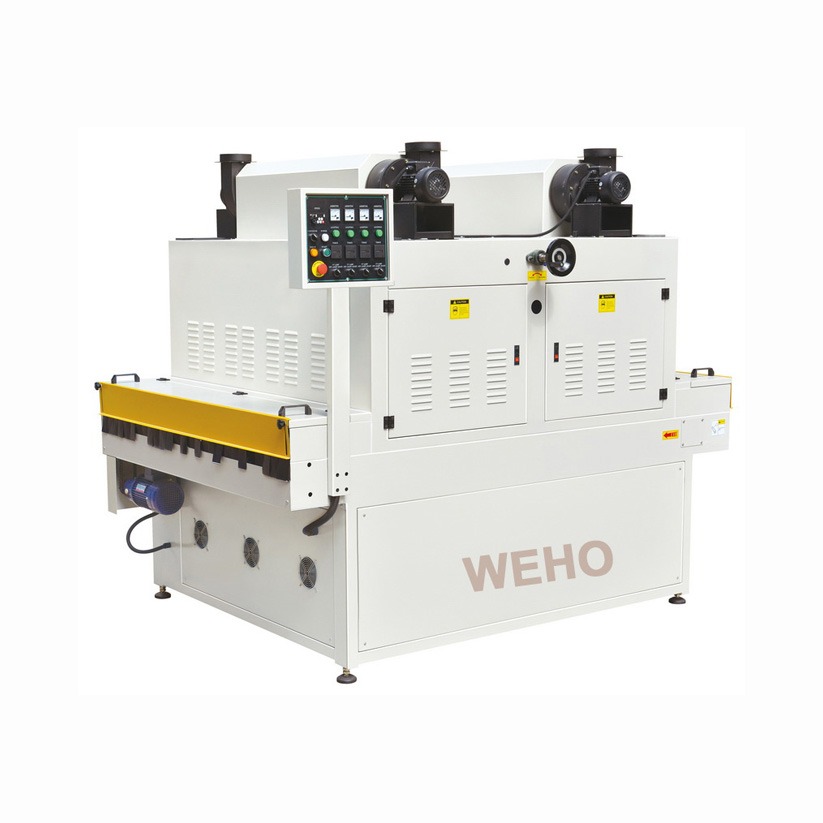
For these reasons, UV roller coating has become one of the most widely used finishing solutions in modern panel furniture production. The following section introduces the advantages and key features of UV roller coating machines used in industrial wood finishing lines.
When Should You Choose Spray Coating?
Although UV roller coating offers many advantages, spray coating still plays an important role in woodworking finishing.
Spray coating is often preferred when:
- The product surface is irregular or curved
- Furniture designs include carvings or decorative details
- Production volume is relatively small
- Frequent color changes are required
In these situations, spray coating provides greater flexibility.
Which Coating Method Is Better for Wood Panels?
For flat wooden panels such as MDF, plywood, and cabinet boards, UV roller coating is generally the better solution.
It provides higher production efficiency, more uniform coating thickness, and lower material waste.
However, spray coating still plays an important role for furniture parts with complex shapes.
Many furniture manufacturers combine both technologies to achieve the best finishing results.
Recommended Wood Coating Machines
To improve production efficiency and surface finishing quality, many woodworking factories invest in professional coating equipment.
| Machine Type | Main Function | Suitable Application |
| UV Roller Coating Machine | Apply UV coating evenly on panels | MDF panels, decorative boards |
| Wood Painting Machine | Automated coating for wood surfaces | Furniture manufacturing |
| Automatic Coating Line | Complete coating production system | Large furniture factories |
Professional equipment such as WEHO uv roller coating machines and wood painting machines can significantly improve finishing efficiency and coating consistency.

FAQs
Q1:What is the main difference between UV roller coating and spray coating?
A1:UV roller coating uses rollers to apply coating evenly on flat surfaces and cures it instantly with UV light, while spray coating applies paint through spray guns and is more suitable for complex shapes.
Q2:Is UV roller coating better than spray coating?
A2:For flat panel production and large-scale manufacturing, UV roller coating is usually more efficient and cost-effective.
Q3:What materials can be coated with UV roller coating machines?
A3:UV roller coating machines are commonly used for MDF, plywood, particle boards, decorative panels, and laminate flooring.
Q4:Does UV coating improve wood durability?
A4:Yes. UV coatings create a protective surface layer that improves scratch resistance, moisture resistance, and durability.
Q5:What industries use UV coating machines?
A5:Industries such as furniture manufacturing, decorative panel production, flooring manufacturing, and cabinet production widely use UV coating machines.